மாற்றுச் சங்கம்Structural evidence for parliamentary accountabilitya stateless civilisational evidence institution — built in the United Kingdom.
We do not lobby, we do not aggregate, we do not name. We publish citation-anchored evidence packs, run standing civic desks, and let an AI archivist read the corpus back to anyone who asks — in any language.
படிப்பகம்
A civilisational study hall. Tamil-first. Alias-only. Every claim citation-locked. Complete the Foundation and something changes — not in the archive, in you.
The Balachandran
Envelope.
பாலச்சந்திரன் — ஒரு குழந்தை. ஒரு கேள்வி. நூற்றுப் பத்து நிறுவனங்கள்.
One child, twelve years old, in state custody, eating a biscuit — dead of close-range gunshot wounds hours later. One hundred and ten identical envelopes. One question, posted from the United Kingdom to one hundred and ten institutions across nine tiers:
"Was this a lawful killing?"
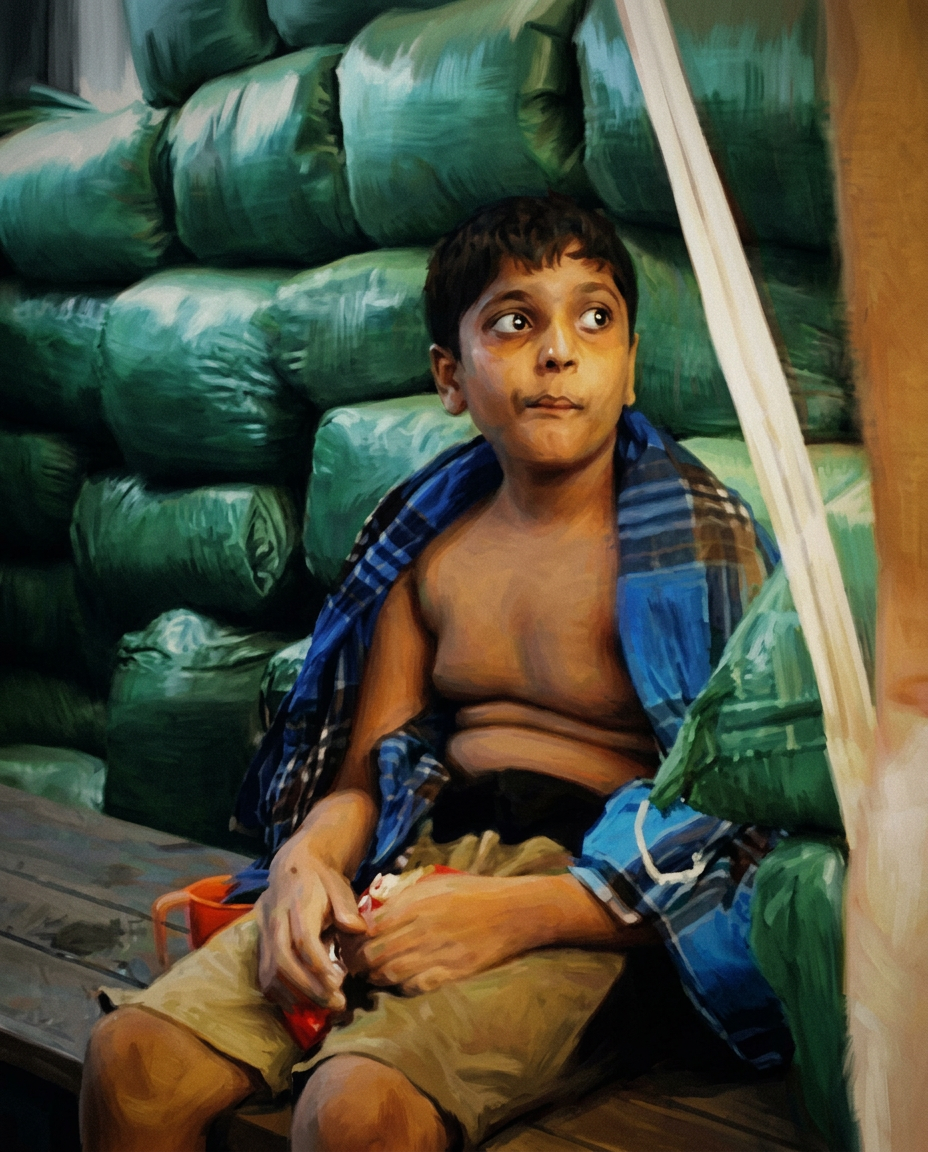
இடைவெளிThe Interval.
The state administers the North-East.
Households carry what the ledger does not.
Who administers the North-East, who finances it, who sustains daily life, and who carries the unresolved cost. Four asymmetries — fiscal, verification, measurement, memory — read only from figures their own publishers put on the record, each carrying source, date and confidence.
A comparison of published provisions, not a claim of transfer. The finding is the ratio — and that the ratio is set centrally.
- Provincial poverty after 2019
- Remittance destination
- Provincial security footprint
- Land released against land held
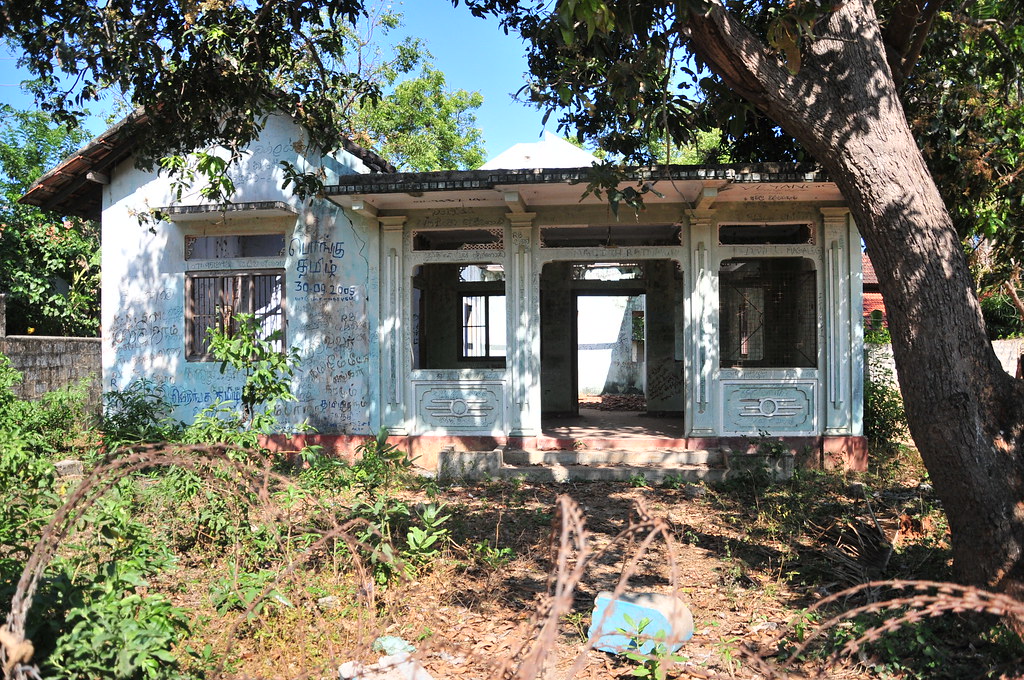
வீடு மறைய மறுத்ததுThe House That Refused to Disappear
Fire altered the structure. Water carries the memory. A library changes what the site can do.
சேதுThe Strait.
Thirty kilometres of shoals. Three dynasties named their power after it. Hymns sang both shores as one sacred landscape. Follow two thousand years of the sea that joined more than it divided — every event marked by the strength of its evidence.
- Events
- 18
- Strong / Tier A
- 10
- Shores
- 2
Legend is shown as legend, never as proof. No territorial claim.
கணக்குThe Reckoning.
Nine democracies froze the money.
None of them published where it went.
An audit turned inward. Kaṇakku reads the diaspora's own money architecture, its street economy, and its folklore against the documentary record — and finds the hole is not in the community. It is in the law. Corruption proceeds have a treaty-mandated route home to victims. Frozen counter-terrorist-financing money has none.
The empty column is not a graphic device. It is the finding. Absence of a public record is stated here as absence — never as an accusation.
Seven clauses any candidate — in any election, anywhere — may adopt at their own address. TLTE stands nobody, funds nobody, endorses nobody, and names nobody. The standard reaches a ballot without ever touching one.


 Aarambam · the forest and the sky, one structure
சுழல் வானம்The Civic Orrery
Begin here. One sun — the Standard. Organs in orbit, surfaces as moons, every cited source a body in the belt, and the uncited ground drawn as cold mass rather than hidden. Tap any body and a Night Edition prints out of the dark.
Enter the mapNo WebGL? Read it flat at /orrery-atlasChemmani Accountability Desk
Count Them. Name Them. Protect the Truth.
TLTE's first stand. The Institute for Accountability, Memory & Forensic Justice begins with Chemmani — the court-supervised mass-grave accountability case in Jaffna, now the largest identified mass grave on the island. No future for a people can be built while their dead remain unnamed.
Judicial record · the presiding Jaffna Magistrate · Phase 3 closed 19 Aug 2026 · 582 sets identified, 573 fully exhumed, nine left in the ground, 160+ personal belongings (Tamil Guardian and Sri Lankan press of record, 19–20 Aug 2026; >500 at ~day 100 per Tamil Guardian / Daily Mirror / Ada Derana, 7–8 Aug 2026) · EU + IT/DE/FR/NL ambassadors on site 22 Jul 2026 · 8 of 15 from 1999 still un-returned (UN AL LKA 1/2025) · ITJP 14 Jul 2026 report
From a grave to a filing.
Four public artefacts that route Chemmani evidence onto rails that already exist — OHCHR, the UK sanctions template, ICMP standards, and the civil-society tribunal form.
Peer-reviewed DNA-led kinship model, side-by-side.
Standing UN evidence-preservation mandate.
Built on the 24 March 2025 designation template.
Uyghur Tribunal-form, Aarambam-era architectural spec.

TLTE · The Transformative League of Tamil Eelam presents
The Great Binding Law
தீ நூல்
Nine movements, eight falsifiable functions, and a page of what is not yet true on every movement. Tamil verso, English recto — the two-layer rule printed as a spread.
Aarambam edition · era-week 2950 · 9 movements
கண்ணாடிThe Mirror.
A nation that cannot be raided must first be checkable.
Kaṇṇāḍi turns the institution inside out on purpose. Every rule it follows, every pound it moves, every request it refused, and every rung a member can climb — published, dated by era, and open to inspection. What stays sealed is inventory: identities, sites, coordinates. Never conduct.
Rungs 1–4 are earned by work. 5–7 additionally require elapsed era-time. 8–10 can only be conferred by another person. There is no path through any of them that money can take.
We declare what already operates.
இயங்கிக்கொண்டிருப்பதை நாம் அறிவிக்கிறோம்.
A Hybrid Nation — non-territorial, non-military, consent-based. Not a state. Not a government-in-exile. A civic body that governs the people who consent to its charter, anchored in Tier-A evidence and continuity.
The flame is in the palm.The palm is measurable.
Eight falsifiable functions. One deterministic sky. One statute engine. Framed by the pañcakṛtya — five acts on one body, one sentence spoken by the archive itself.
Violations against verdicts reached.
Log ratio: state coercion / minority capacity.
Exponential decay per abrogated pact since 1987.
NE growth vs national baseline · 1911–2012.
Non-secessionist constitutional pathways still open.
ICCPR Art 20 / ICERD Art 4 enforcement-gap audit.
UGC · CBSL · World Bank inputs. Descriptive, not predictive.
PTA → PSTA → ICCPR Act — statutory ceiling over time.
Also live in the lab — Civilian Protection Index, Civic-Space Compression, Resilience. The eight above are the case-file spine.
NASA JPL J2000 elements · Newton-Raphson on Kepler's equation · vis-viva · lunar node regression at 18.6 Julian years · era-week reproducible.
Every function source-bounded. Every input UN / OHCHR / UGC / CBSL / Amnesty / ICG. Explicit falsifiers per model. No forecasts. No verdicts.
Here are the equations. Read them, break them, or cite them — the archive is falsifiable by design.
Eight functions · two proofs · one era-week seed.
நெருப்புச் சுவடிThe Fire-Codex
A hundred leaves. Six acts. Six instruments. The whole bundle is corded. It opens to a key, not to a crowd.
The card burns, but it does not flame. It will open when the era turns.
The Laboratory
Twelve desks. A grader for attribution claims. A map of the Tamil political organisations the monoculture reading erased. A citation verifier that grades a URL against the Tier-A allowlist. The north-east was a testing ground — the Laboratory audits the tests.
Three surfaces. One ecosystem. One archive of trust.
The homeland where the diaspora gathers. The governance spine that keeps power answerable. The intelligence lens that watches without naming. Built as one system, deployed as three sovereign surfaces.
Custom domains provisioning · Read the Trilith doctrine →
The Operator
When the time arrives.
The Living Atlas
Beneath the evidence, a longer ground.
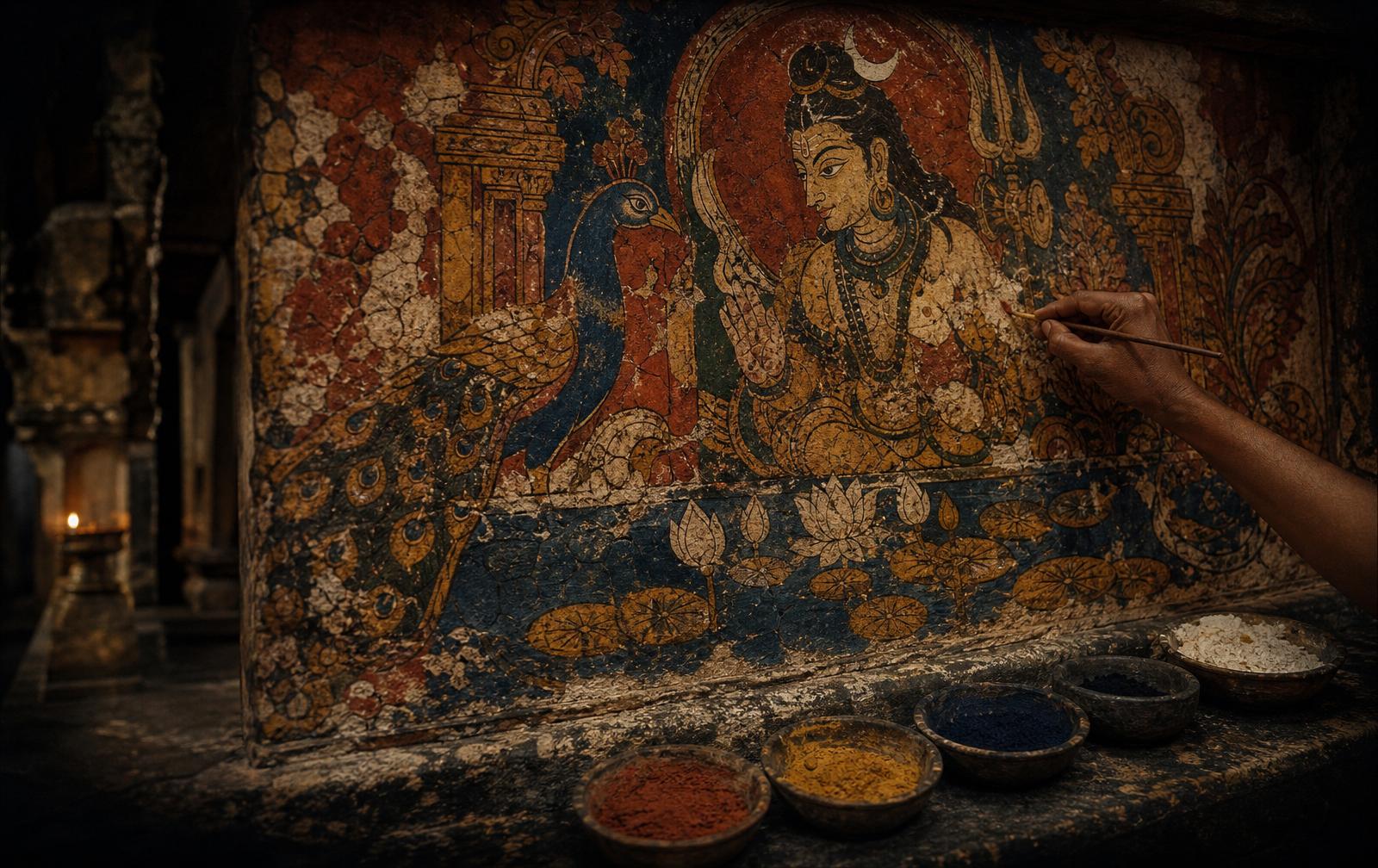
Aazham is the pre-evidentiary root of the archive — Tamil civilisational depth rendered as a cinematic, immersive realm. Hand-crafted images, palm-leaf fragments, mural pigment, monsoon breath. No names, no dates — only the ground the Chronicle stands on.
What did you come here to do?
Eleven citation-anchored packs. Each one carries Tier-A anchors, drafted PQs, and pack-specific safety rules. Hansard-traceable.
Open the pack libraryDemilitarisation · Disappearances · Land · Diaspora Economy · Press Freedom · GSP+ · Recorded Legal Memory. OSINT-only, no intake.
Enter UnmaiMethodology, ethics, the citations registry, the ecosystem map, the outreach templates, and how to cite this archive in your own work.
Open the Reading RoomSeven Sacred Rules. Twenty-One Roots. The two-layer rule. What TLTE is — and the much longer list of what it is not.
Read the CharterYou do not need to trust anyone.
Two public doctrines hold this work in place. One sequences when a capability is allowed to move. The other binds who can own it. Together, they make the Founder replaceable by design.
The Sequencing.
ஆரம்பம் → நிலைத்தன்மை
Five observable gates. Each one closes by evidence — not by date, not by mood, not by a leader's announcement. No capability moves ahead of its gate.
Walk the five gatesThe Structure.
70 / 25 / 5 — யாரும் தனியாக உரிமை கொள்ள முடியாது
TLTE holds 70%. Five Pillar Stewards hold 25%. 500 rotating Sabhai hold 5%. The Founder seat vacates on four evidence gates — by binding rule, not by trust.
See who owns whatSequencing says when · Structure says who · Neither says a person
One archive. Seven organs. Four cardinals.
The whole system in one frame — breathing on the archive's heartbeat. The Regional Lens reads the surround as shield and exposure, symmetrically. Tier-A only.
Four cardinal lenses read the surround — India, Tamil Nadu, China, the Indian Ocean — as shields and as exposures. Seven organs orbit the core. The spine holds.
The archive can answer you directly.
Velicham is grounded on the canonical TLTE corpus and verified web sources. Every reply cites where it came from. Pick a question — or ask your own.
What the archive actually contains
The Diaspora Law Index
124 laws · 14 jurisdictions · 5 filter axes. Filter by what each law does to the diaspora — enables, protects, restricts, criminalises — or by what work it supports: asset recovery, accountability, protest rights, self-determination, minority protection, peaceful assembly.
UNDRIP, ICCPR Art 1, Quebec Reference 1998, Kosovo AO 2010, ECHR, UN Charter — the framework for peaceful self-determination and minority protection.
BrowseUNCAC Ch V, UK POCA + Unexplained Wealth Orders, Swiss FIAA, Singapore CDSA, FATF/APG — the architecture for recovering misappropriated funds.
BrowseMagnitsky regimes (UK/US/CA/EU/AU), universal jurisdiction (UK CJA s.70, German VStGB), Rome Statute Art 28 command responsibility.
BrowseSri Lanka PTA 1979, Online Safety Act 2024, proscription regimes (UK TA 2000, US AEDPA) — the laws the diaspora navigates daily.
BrowseOne stream · three sources of structural change.
Continuity entries, verified MP statements, and new citations — appended in the order they entered the public record. No engagement metric, no viewer counter.
- Critical ResearchKaruna · The Evidence File (Reading Room v1.0) published
A free, confidence-tagged PDF gathers the public record on Karuna and the Karuna group/TMVP: the 2006 UN Allan Rock mission findings and CAAC Annex II listing, the UK Global Human Rights sanctions designation (GHR0151, 24 Mar 2025), the 2008 UK false-passport conviction, HRW research, his own statements and denials, the Pillayan proceedings, and an open list of gaps. TLTE issues no verdict; no victim, witness or serving officer is named.
- Critical ResearchEra Docket: Nallur statue removal recorded
The Era Docket records the removal of the Thileepan statue from the Nallur memorial the morning after the 39th commemoration closed. The police's stated legal basis is quoted word for word and marked unverified; the open question is which court, what case number, and whether a judge signed an order. No officer or complainant is named, and no claim is made about who gave the order.
- Critical ResearchTerrorism Bill civic file, Two Soils, and Era Docket additions
A civic file now reads the gazetted Protection of the State from Terrorism Bill (PTA repeal, reach outside Sri Lanka, retained detention, challenge window marked unconfirmed). Two Soils compares Keezhadi and Chemmani strictly as evidence method, recording the Keezhadi dating dispute without deciding it. The Era Docket adds the bill's challenge window, Chemmani's 14 October meeting, and the Anojan clemency appeal (state actions only; single-source reports not relied on).
- Takeshobo, Kindai Mahjong (2006–2015)Mudazumo Naki Kaikaku (Legend of Koizumi) — satirical fiction, cited as entertainment reference only
Hideki Ohwada
- Comic Smart / Micro Magazine, Ganma! (2013–present)Tasūketsu: Fate of the Majority — fiction, cited as entertainment reference only
Taiga Miyakawa
- Shueisha, Weekly Young Jump (2006–present)Kingdom (Kingudamu) — manga set in the Warring States period, cited as entertainment reference only
Yasuhisa Hara
Where the work is — and where it is going.
ஆரம்பம் means the founding. In this era TLTE is a one-Witness archive operated under UK law, with a second Continuity Witness sealed from Entry 4 onward. No real votes, no real treasury, no intake of survivor testimony.
- · Public evidence packs and civic desks — citation-only.
- · Velicham AI grounded on a 153-source registry.
- · Append-only Continuity Changelog under two-Witness rule.
- · Six Graduation Gates open — no intake of named individuals.
நிலைத்தன்மை means durability — the civilisational target. Five rotating Councils, distributed stewardship, Min as a pure non-tradable energy marker, and partnerships with the institutions that already hold the trust we do not yet hold.
- · Survivor work always routed to PEARL · ITJP · OMP · OHCHR.
- · No surveillance, no naming, no aggregation — ever.
- · Recall procedure operable, not aspirational (see /recall-dry-run).
- · Power without capture — quiet, long-horizon, legally cautious.
Four sentences that prevent four kinds of mistake.
- Not a state, not a party.
TLTE has no claim of sovereignty and contests no election anywhere.
- Not a charity, not a fund.
TLTE is a UK Community Interest Company. We do not solicit donations on this site.
- Not a SaaS, not a platform play.
No paid tier exists. Min is an internal contribution credit, never a currency for sale.
- Not a substitute for the UN process.
Where survivor or accountability work is needed, we route to PEARL, ITJP, OMP, OHCHR.