1
Tier-A
UN Secretary-General's Panel of Experts (2011)
Credible allegations of custodial executions of surrendered and captured persons in the final phase; command-responsibility framework triggered.
பாலச்சந்திரன் — ஒரு குழந்தை. ஒரு கேள்வி. நூற்று பத்து நிறுவனங்கள்.
One child, twelve years old, in state custody, eating a biscuit. Killed by close-range gunshot wounds within hours. Photographs on the public record. Findings on the public record. A Panel of Experts. An OISL report. A commission of inquiry yet to come.
One hundred and ten identical envelopes, posted from the United Kingdom, to one hundred and ten institutions across nine tiers, carrying one question:"Was this a lawful killing?"
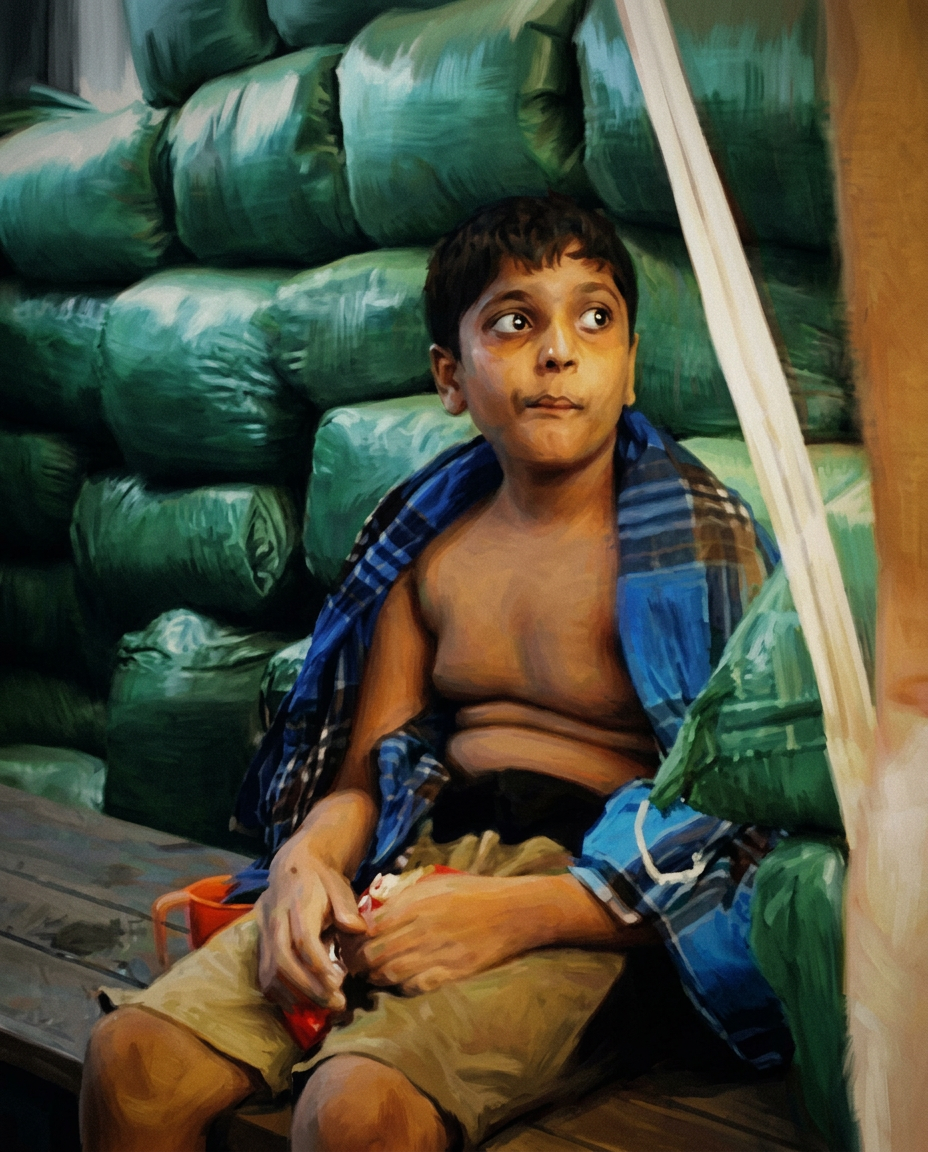
Four UN mandate-holders — SR Truth & Reparation, WGEID, SR Extrajudicial Executions, SR Independence of Judges — named this case cluster in one joint communication to the Government of Sri Lanka. No substantive reply on the public record.
Read the anchor →Balachandran no longer sits alone in the record. He sits inside a UN-named cluster that already reaches Chemmani.
A single well-cited envelope, replicated exactly one hundred times, is not a hundred pieces of noise. It is one signal, sampled across one hundred independent listeners.
Identical contents remove the possibility of tailored persuasion. Every recipient sees the same evidence, the same question, the same silence, the same continuity.
When mandate-holders, editors, MPs and academics receive the same anchored question in the same week, the cost of ignoring converges above the cost of engaging.
Accountability probability rises with anchored uniqueness × recipient diversity × repetition, and falls with emotional aggregation + unverified claims. The envelope is designed to maximise the first term and hold the second at zero.
Credible allegations of custodial executions of surrendered and captured persons in the final phase; command-responsibility framework triggered.
Reasonable grounds to believe war crimes and crimes against humanity, including custodial killings, occurred during the final phase.
Forensic photographic sequence: child alive in custody with a biscuit; same child photographed hours later with close-range gunshot wounds.
Named the case publicly as an emblematic instance of custodial killing warranting individual criminal responsibility.
Case included in the standing evidentiary corpus on custodial killings of children during the final phase.
Family refusal of scam networks; insistence on lawful, evidence-first accountability rather than rumour or vengeance.
Four UN Special Procedures mandate-holders jointly named the Channel 4 case cluster — including Balachandran — alongside Trinco 5, ACF, Navy 11, White Flags, Mullaitivu, and Chemmani in one active communication to the Government of Sri Lanka.
Contemporaneous record-of-account reporting on the Channel 4 forensic photographs and the UN response — placing the case in the mainstream international press record.
The forensic photographic sequence engages Article 8(2)(c)(i)–(ii) (murder / cruel treatment of persons hors de combat) and Article 8(2)(e)(vi)–(vii) (sexual violence / conscription and killing of children). Sri Lanka is not a state party (FCDO position, Lammy at FAC Q315–Q316). This does not close the door — it names the door.
| Tier | Count | Examples |
|---|---|---|
| UN Special Procedures | 20 | SR Truth & Reparation · WGEID · SR Executions · SR Torture · SR Judges |
| OHCHR & UN Treaty Bodies | 8 | OHCHR OSLAP · CAT · CRC · CCPR · CED · CERD |
| International Criminal Court | 2 | OTP Article 15 communications — jurisdictional and evidentiary desks |
| UK Parliament & Government | 15 | APPG Tamils · FCDO ministers · FAC members · select committees |
| European Union & Member-State MFAs | 10 | Chemmani delegation · EEAS · DG Trade (GSP+) · member-state MFA desks |
| Global South Accountability Mechanisms | 10 | African Commission · IACHR · ASEAN AICHR — Global South accountability mirrors |
| International Accountability NGOs | 10 | ITJP · PEARL · HRW · Amnesty · ICG · ICJ |
| Research Institutions | 15 | Chatham House · RUSI · law faculties · human rights centres |
| Editorial Desks | 15 | Record-of-account journalism (institutional, not individual) |
| Reserve / Alternates | 5 | Reserve / alternate slots — held until a primary desk is unreachable |
| Total | 110 | 101 sendable · 9 held pending verification |
Balachandran (12) · custodial-killing register. Identical across all 110 envelopes.
One page. Public template. One question. No demand for pressure on named persons.
Scans to /balachandran. Manifest at /.well-known/tlte-balachandran.json.
Tier-A only. Seven anchors. No aggregation, no counts by TLTE.
Every envelope carries this code. A recipient with a phone reaches the full citation ledger, the manifest, and the two-layer structure in under ten seconds. No login. No cookie gate. No mailing list.
The recipient register and the three volumes name every desk that receives the envelope. They are held under a dispatch seal until the first envelopes have landed — naming the desks in advance only buys a respondent time to prepare a line. The seal lifts permanently on first delivery. Nothing in the evidence record is withheld.
The live response ledger: 110 institutions across 10 tiers,101 verified for send, 9 held for verification.
Send doctrine, refusal register, chain-of-custody log, and the printable Certificate of Dispatch for the campaign.
Volume I (Recipient Register), Volume II (Operations Manual), Volume III (Leverage Atlas), and the machine-readable CSV export.
No shipments into Sri Lanka. Fisher-safety and PTA §3(g) risk are non-negotiable.
No pressure on named individuals inside institutions. Institution-not-officer.
No aggregation of counts by TLTE. Counts route via OHCHR, ITJP, PEARL.
Envelope contents remain identical across all 110 recipients.
This is a state-accountability spine. Not a VP-rehabilitation surface, ever.
Sender addresses may be diaspora members' own UK addresses only — never third parties.
"The archive does not shout. It arrives — identical, anchored, unignorable — and it waits."