Before the island was an island, there was the sea. Before the sea had a name in Portuguese or English or Sinhala, it had one in Tamil, and before Tamil, it had the wordless rhythm of the monsoon — six months turning north, six months turning south, and the ships and the dhows and the outrigger catamarans running with it.
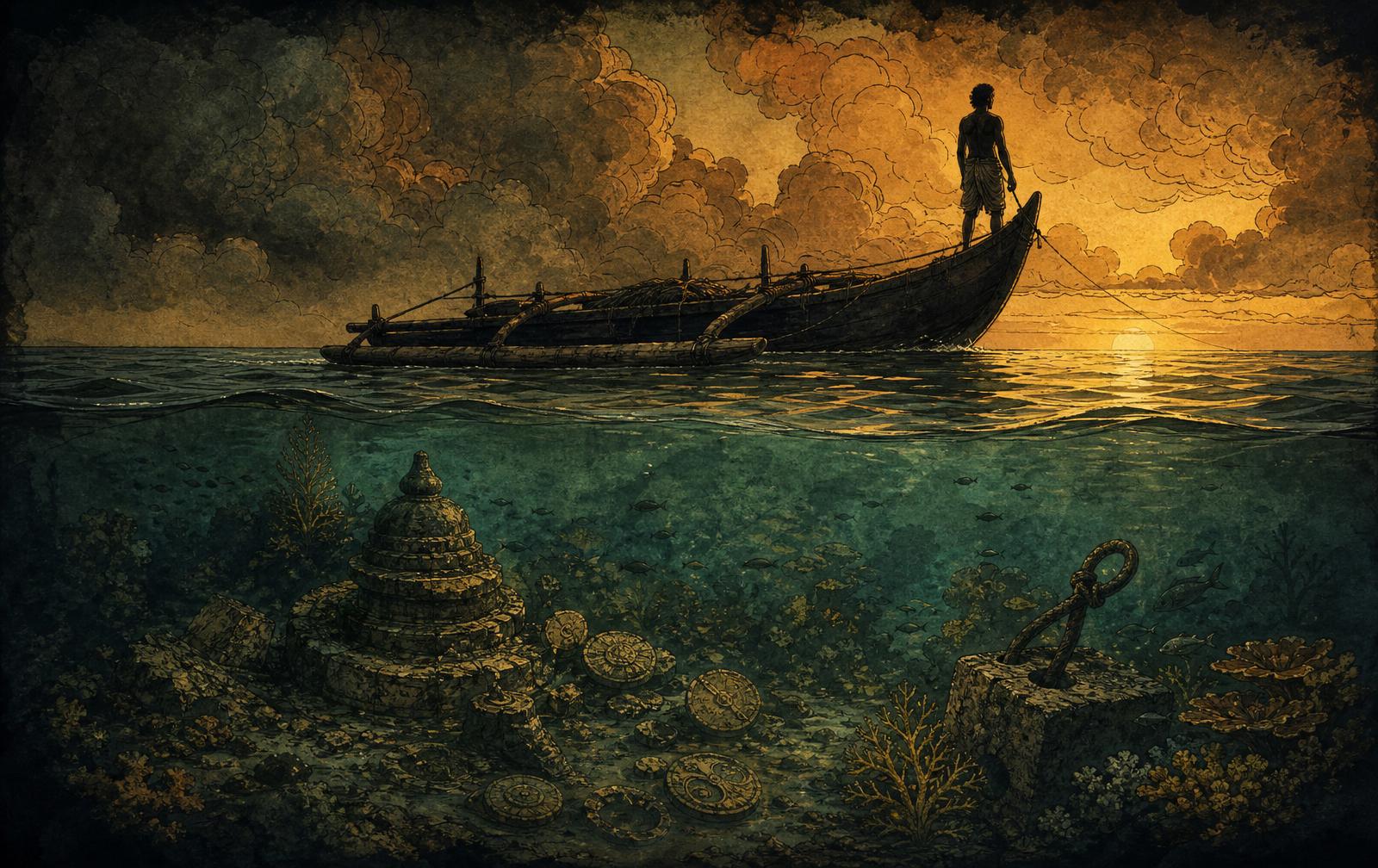
A catamaran at dawn on the Gulf of Mannar · Kantarodai below · lineage: Kalamkari · Kerala mural pigment
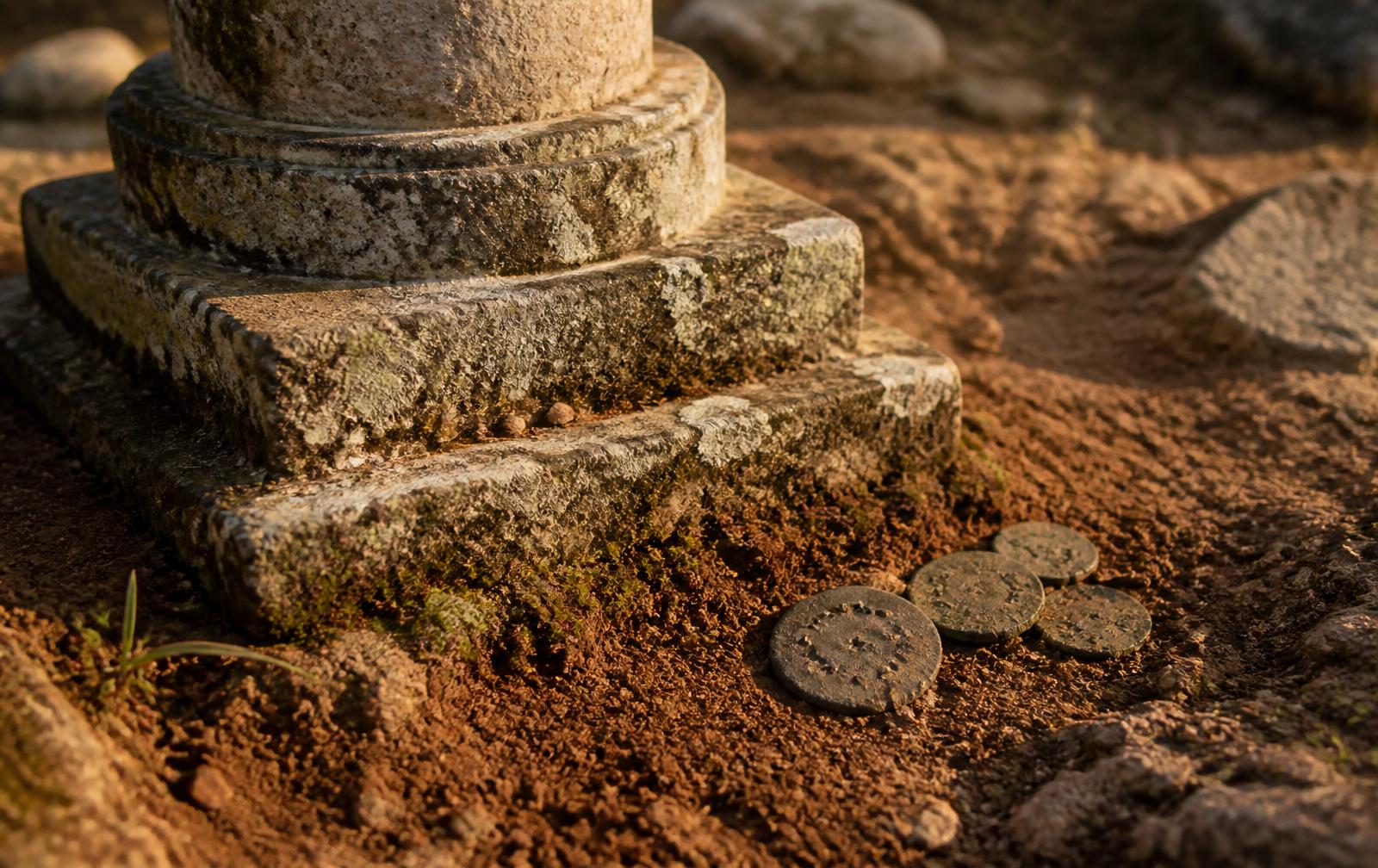
Kantarodai · the coin-bed under Jaffna
Twenty kilometres north-west of Jaffna town, at a place the locals call Kantarodai, the fields drop stūpas into the ground the way an older sea drops coins. The site is small — a cluster of miniature votive stūpas no bigger than a person, and beneath them a stratigraphy that reaches back to at least the third century BCE. Roman denarii. Punch-marked Tamil coins. Chola successor coins layered on top.
What Kantarodai says, quietly and without argument, is that the Jaffna peninsula was already a node in the Indian-Ocean trade system a full millennium before the political categories we now use — Sinhala, Tamil, Ceylon, Sri Lanka — congealed into their modern shapes. The seabed under the sea remembers first.
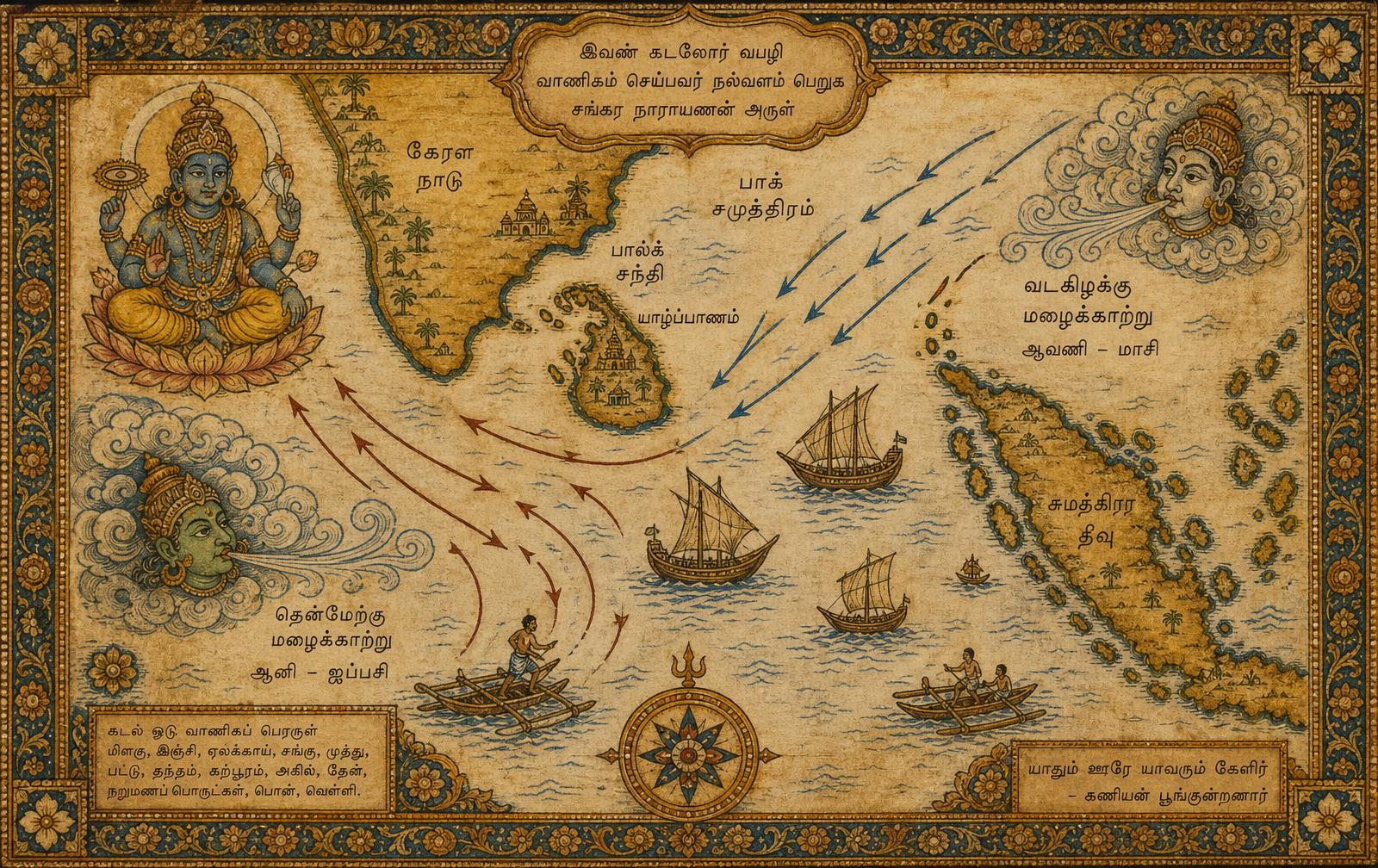
Stupa base · Kantarodai · Punch-marked coin stratigraphyMonsoon-route Kalamkari · south-west and north-east winds · dhow and catamaran
Poompuhar · the city the sea took back
On the other coast of the sea, at the mouth of the Kaveri, the Cilappatikāram names a Chola port called Kāvirippūmpaṭṭinam — Poompuhar. The epic tradition remembers the city as flooded, its wharves and warehouses drowned in a single tidal event. Marine survey off Tarangambadi has since found submerged brick walls in a grid, wooden wharf posts, and worked stones at depths consistent with a several-metre subsidence, dated to the early centuries of the common era.
The sea gave up her old cities, and the fishermen sang of them. What she took, she took whole.
— Cilappatikāram, ancient Tamil epic tradition
The monsoon as a road
The south-west monsoon is not weather. It is infrastructure — a great seasonal escalator of moist air moving north-east from June to September, reversing December to March. Roman merchants used it. So did the Arab traders. So, long before either, did the mariners of the Tamil coast and the Malabar coast and the Sinhala coast — because the monsoon does not respect a border it cannot see.
When the archive later argues that the Palk Strait and the Gulf of Mannar are a shared civilisational surface, not a colonial line, this is the ground it stands on. The monsoon has always been the road. The seabed has always been the floor of a single house.
What this layer holds
The evidentiary desks that argue for a Tamil homeland in the north-east of the island do not begin at 1948 or 1972. They begin here, on this seabed, under this sea.