
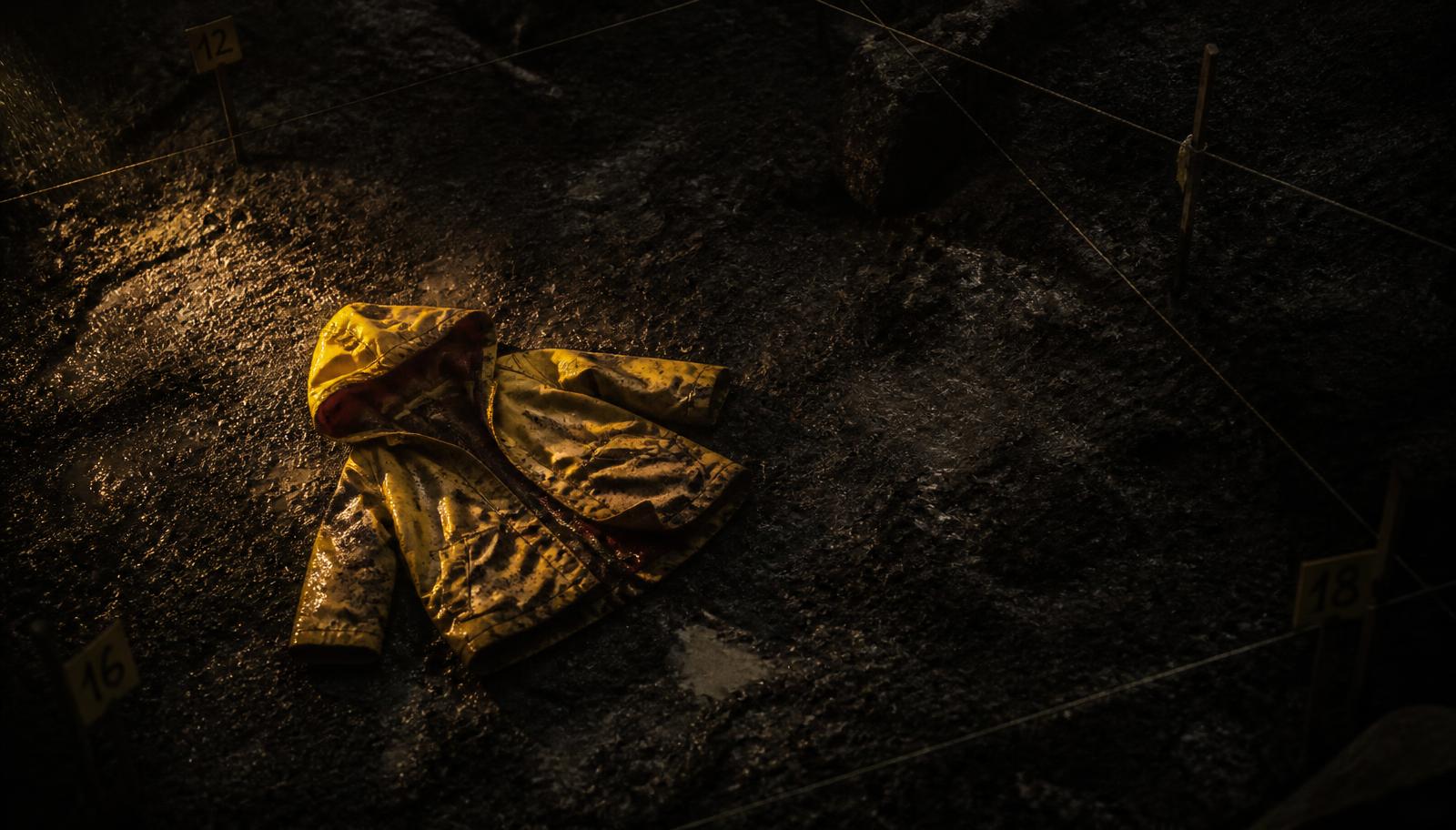
மழைக்கோட்டு அணிந்த குழந்தைThe Child in the Raincoat
RECOVERED 24 JULY 2026 · NO BURIAL RECORD, 5 AUGUST 2026 · ARIYALAI SITHTHUPATHTHI HINDU CEMETERY, NALLUR
A cemetery is a machine for keeping records. This one has a child it never wrote down.
A garment, not a name.
On 24 July 2026, in the course of the third phase of court-supervised excavation at the Ariyalai Siththupaththi Hindu Cemetery, Nallur, Tamil Guardian reported the recovery of a body found in a raincoat, alongside a separate set of headless remains, and reported that the criminal investigation supporting the dig was faltering. The remains recovered in the raincoat have since been referred to in reporting as those of a child.
The Institute reproduces that reporting and nothing beyond it. No age is asserted here. No identity is asserted. No cause of death is asserted. Those are matters for a forensic and judicial process — and, as this archive has argued since the site re-opened, for an independent international one.
There is no burial record for this grave.
When excavation resumed on 5 August 2026, Tamil Guardian reported that the cemetery holds no burial record corresponding to the child recovered in the raincoat.
This is why the page exists. A licensed cemetery is an administrative institution before it is anything else: it registers who was interred, on whose authority, and on what date. A body inside its ground with no entry against it is not a gap in memory. It is a gap in the paperwork of the state that licensed the ground — and that gap is documentary evidence in its own right, of a kind that survives the passage of decades better than testimony does.
The absence is also testable. Registers can be produced, compared against the recovered positions, and audited by an independent forensic team. That is a concrete, narrow, answerable demand, and it is already inside the standing evidence-preservation mandate of the OHCHR Sri Lanka Accountability Project under HRC resolution 46/1, renewed through 60/1.
Bone gives you a person. Cloth gives you a date.
Skeletal remains, absent DNA matching, are slow to speak. Manufactured objects are faster. A raincoat has a size, a material, a construction method, and often a period. It speaks to the stature of the person wearing it and to the era in which it was made — the two facts a domestic carbon-dating dispute cannot easily erase.
The raincoat therefore belongs to a growing object record at this site: a ring still attached to a finger bone (Daily Mirror, 17 July 2026); infant feeding bottles, school bags, coins and children's toys catalogued under judicial custody; and the blue schoolbag reported by CNN in November 2025. Each is independently datable. Together they are the strongest non-skeletal argument for independent international forensic access.
- · Name the child, or any family, relative, or claimant.
- · Assert an age, an identity, or a cause of death.
- · Name a perpetrator, unit, or command chain.
- · Publish or imitate imagery of human remains. The illustration on this page is original artwork and depicts no person.
- · Publish a TLTE-aggregated count. The judicial record carries the figure.
- · Accept family, survivor, or claimant intake of any kind.
- Tier CTamil Guardian24 July 2026Headless remains and body with raincoat uncovered at Chemmani as CID faltersOpen source
- Tier CTamil Guardian5 August 2026No burial records for Chemmani 'raincoat' child as excavations resumeOpen source
- Tier BCNN29 November 2025A blue schoolbag in a mass grave. Sri Lanka's bloody past is re-emerging from the soilOpen source
- Tier CDaily Mirror (Sri Lanka)17 July 2026Ring attached to finger bone discovered at Chemmani Mass GraveOpen source
- Tier AOHCHRStanding (HRC res. 46/1 → 60/1)Sri Lanka Accountability Project — standing evidence fileOpen source