ஆழம்
The Long Ground
A node existed before the state was drawn. The node did not stop existing when the drawing happened.
8 sections · 38 pages in the print edition

I.1
Why depth comes first
Every argument about this people begins in 1948, or 1956, or 1983, or 2009. Beginning there concedes the premise: that the community is a post-colonial minority problem, and that the frame of reference is the state that inherited the island.
The long ground refuses that framing without denying a single fact inside it. It establishes something prior and materially demonstrable — that the northern and eastern littoral of this island functioned as a node in an Indian Ocean exchange system for a very long time, and that the node's economy, script, metallurgy and ritual grammar were continuous with a wider Tamil-speaking world across the strait.
This is not a claim to ownership. Antiquity confers no title, and this volume makes no title claim. It is a claim about legibility. A community read as a minority inside a young state is legible only as a problem to be managed. The same community read as a node in a maritime system is legible as a civilisation with its own record, its own methods, and its own standing to keep them.
கடல் எல்லை அல்ல. கடல் வழி.
The sea is not a border. The sea is a road.
I.2
பருவக்காற்று
The Monsoon Economy
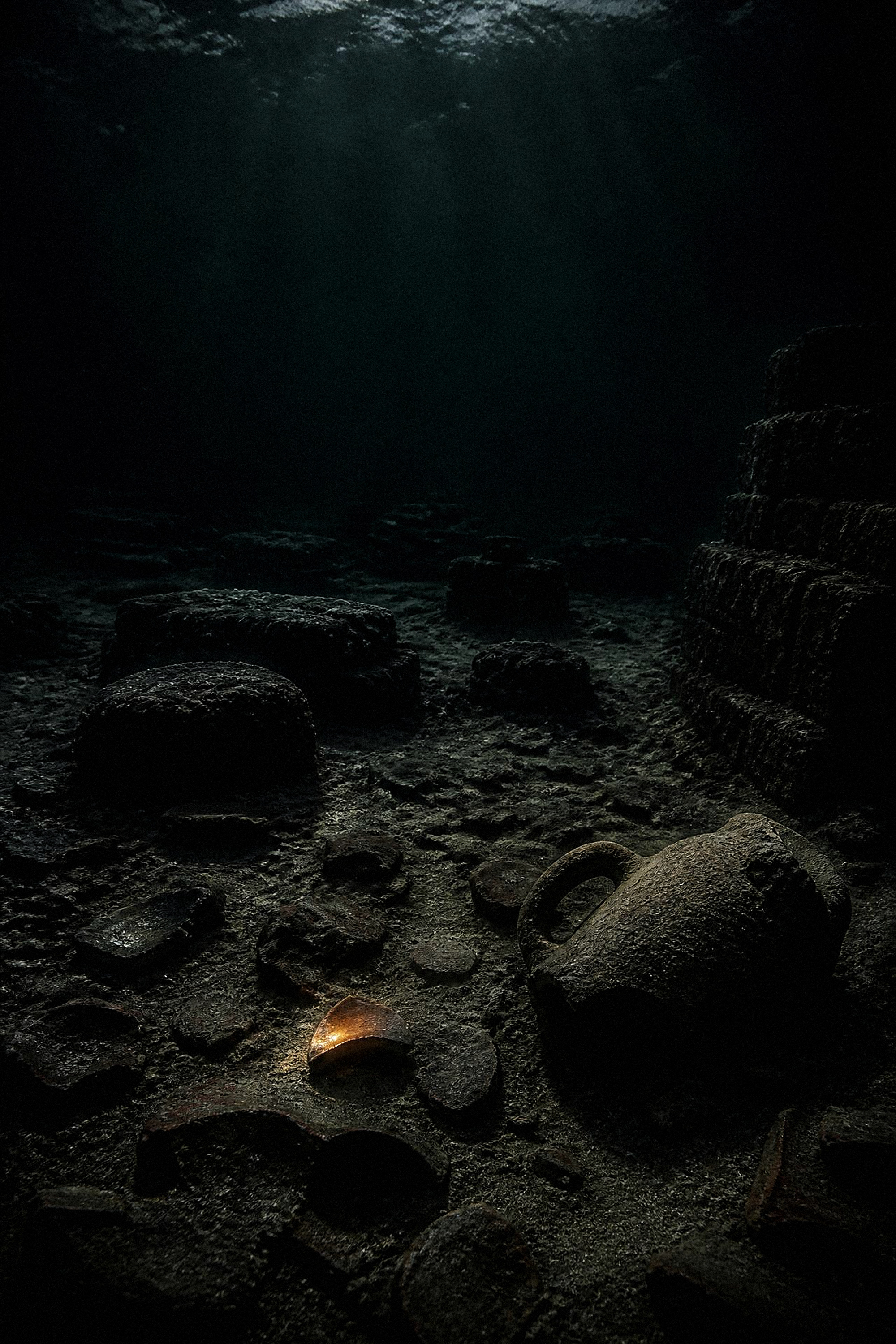
Before engines, the Indian Ocean ran on a clock. The south-west monsoon carried vessels one way for a season; the north-east carried them back. Trade was not opportunistic — it was scheduled by weather with a reliability that road networks of the same period could not match.
A settlement positioned on that clock is not peripheral to anything. It is a station. Ports on the Palk and Mannar coasts sat where the seasonal reversal made landfall necessary, and the resulting pattern of exchange left material traces — ceramics, coin, beads, iron — that do not originate locally and cannot be explained by internal trade.
The consequence for this volume is structural rather than sentimental. A maritime station is oriented outward by default. Its natural counterparties are other stations, not its own hinterland. That orientation is the oldest continuity in this record, and it is the same orientation the diaspora reconstituted, unintentionally, after displacement.
Monsoon-scheduled Indian Ocean exchange is standard in the maritime archaeology and economic history literature; this volume asserts no dating beyond the peer-reviewed consensus and names no site as exclusive to any community.
I.3
Kantarodai and the material floor

There is an early urban horizon on the northern peninsula. It carries coinage, imported ceramics, ritual architecture, and evidence of craft specialisation. It is a settled, layered, commercially connected place, and it predates every political arrangement now argued about.
This volume takes exactly one thing from that horizon: the fact of depth. It does not assign the site to an ethnicity, does not use it to date any community's arrival, and does not enter the arrival-priority argument at all. That argument is a trap for everyone in it, because it accepts that the older presence wins and therefore guarantees a permanent contest over what 'older' means.
Refusals in the long ground
- No arrival-priority claim. This volume never argues that one community was here first.
- No assignment of an archaeological site to an ethnic group.
- No dating beyond published, peer-reviewed consensus.
- No use of antiquity as a title claim over any land.
I.4
ஓலைச் சுவடி
Palm-leaf transmission
The palm-leaf manuscript is the most instructive object in this part, because it solves the same problem this volume solves, with different materials.
A palm leaf is organic. It degrades. In a monsoon climate it has a working life measured in generations, not centuries. The tradition survived not by making the object permanent but by making copying obligatory. Continuity was procedural: the text lived because a scribe was required to reproduce it before the leaf failed.
That is a continuity architecture, and it is the one this body has adopted. No single copy of the record is treated as safe. Survival is a function of replication across custodians who do not share a single point of failure — not of any vault, any server, any company, or any person.
Now · Aarambam
The canon exists as a public web archive, a print edition, deposited copies in national libraries, and a content-hashed source bundle. Four media, different failure modes.
Becoming · Nilaiththanmai
Replication is routine and distributed across custodial institutions in multiple jurisdictions, with the copying obligation written into the Charter rather than depending on the attention of any individual.
The leaf was never meant to last. The copying was.
I.5
வெண்கலம்
The bronze workshop
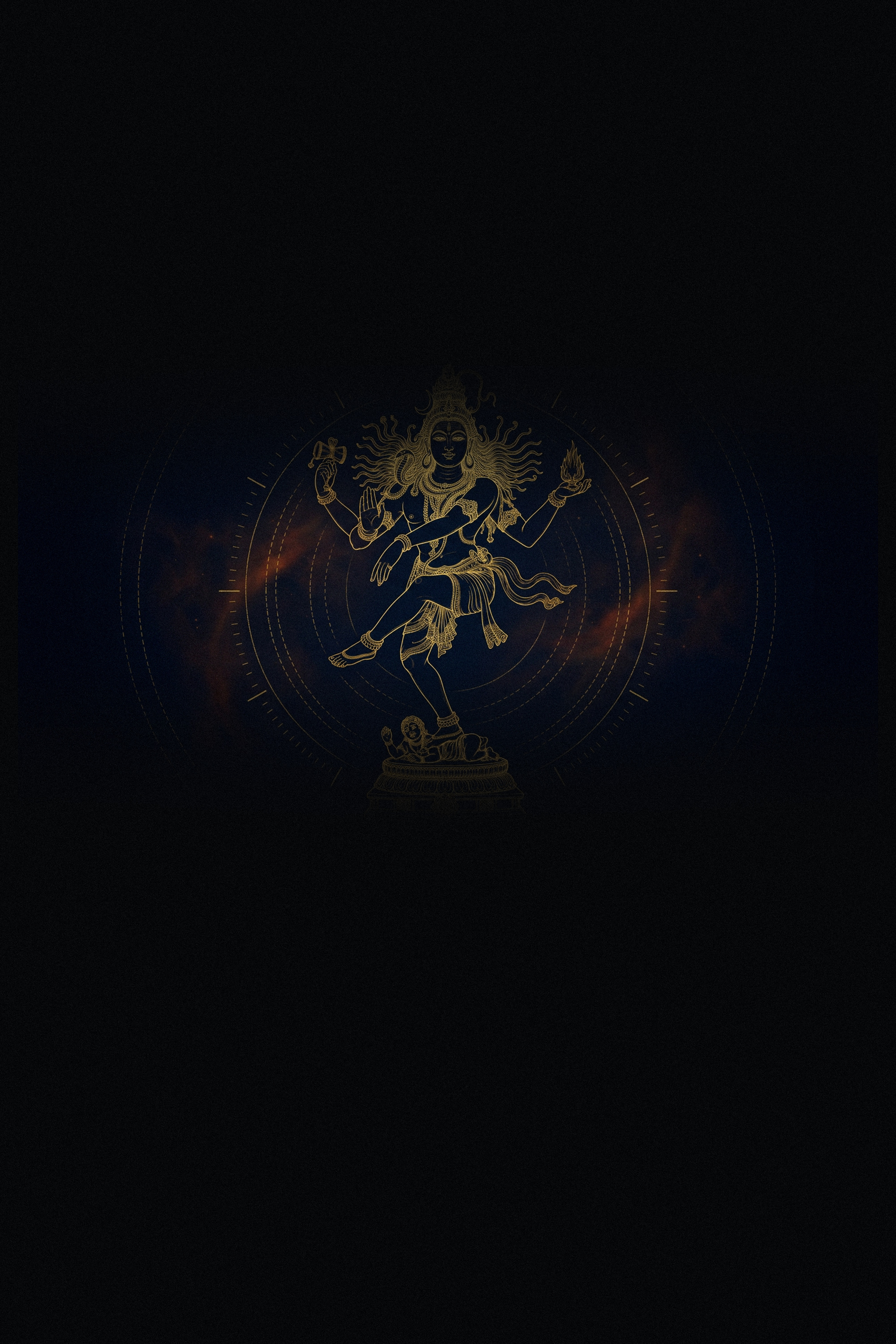
South Indian bronze casting uses the lost-wax method. A wax model is made in full detail, encased in clay, and then melted out and discarded. Metal is poured into the void the wax left. To obtain the object, the model must be destroyed.
It is also a workshop tradition of extraordinary discipline. Proportion is governed by canonical measure. The maker is not free to improvise the geometry. Within those constraints the work reaches a level of refinement that improvisation never reaches — the constraint is what makes the mastery legible.
Both properties are load-bearing here. This body operates under a canon of measure it did not invent and cannot casually vary. And it accepts that the model gets destroyed: the plan, the draft, the earlier framing are all consumed in producing the thing that lasts.
I.6
Pigment, wall and the public record

Mural traditions across the region encode narrative on walls in mineral pigment. The medium matters: a wall painting is public, fixed, and legible to an audience that has no access to manuscripts. It is the mass-communication layer of a pre-print society.
This volume takes the principle rather than the style. A record that only specialists can read is a record with a small failure surface. The canon therefore exists in registers — the technical diagram for the specialist, the plate for the reader who arrives through image, the plain statement for the person who has ten minutes and no background.
I.7
The node, stated plainly
Assemble the material floor and one description survives contact with the evidence: this littoral was a node — a place whose economic and cultural counterparties were reached by sea, whose script and metallurgy were continuous with a mainland tradition, and whose orientation was outward.
The node is the foundation of everything that follows. A node has standing to maintain its own record. A node can federate with other nodes without becoming a state. A node can be displaced across the world and remain a node, because its defining property was never territorial adjacency — it was connection.
Now · Aarambam
The node is a historiographic reading, published with its sources, contestable in the open literature, and used as framing rather than as evidence for any specific accountability claim.
Becoming · Nilaiththanmai
The reading is tested by scholars who owe this body nothing, cited or refuted in peer-reviewed work, and revised in public when refuted.
நிலம் பறிபோனாலும், வழி மிச்சம்.
Take the ground and the road remains.
I.8
What the long ground does not prove
Depth is a framing instrument. It is not evidence of a violation, not a legal argument, and not a substitute for the cited record in Parts III and VII. Nothing in this part should ever be cited to establish a contemporary fact.
- It does not prove entitlement to any territory.
- It does not establish that any community arrived before another.
- It does not carry evidentiary weight in any accountability process.
- It does not license the reading of ancient material as a modern political mandate.
Read the long ground as context. Read Part VII for the record that carries weight.
8 parts · Era Aarambam · Aarambam edition · authored in English